Why don't eggs taste like chicken? Maximising the benefit of children's questions
Purposes of questions
Questions serve many purposes in education. There can be questions that a teacher asks to check children's understanding, or questions to probe and tease out information, or questions to stimulate a train of thought to facilitate learning. Equally important are the questions that students ask the teacher. However, it can often be the case that these questions are predominantly about the procedural aspects of learning: "Miss, what do we do after this?" and so on. The sort of questions that students can ask that are more valuable are the ones about the things they're interested in learning about. As teachers, we can use these as the seeds for learning to sprout and grow from.
Difficult questions from children
There can often be a bit of fear that a child will ask a question we can't answer. The fear is perhaps borne out of an insecurity that we might look like we're not worthy of our teacher status if we're unable to give answers. I've found that over the years this sort of thing has diminished, possibly because I became more knowledgeable and better at answering questions, but more because I realised my job was not about being like an oracle. Instead, I learnt how to use these questions as opportunities. I now celebrate questions I can't answer, because they show me that I'm stimulating thinking in my students, and to be perfectly honest, they often lead to really interesting discussions that probably wouldn't otherwise happen. What tends to happen in those discussions is that students raise other questions, and so learning is steered in a direction that reflects their curiosity, not my prescribed plan for learning. (Of course, it's important not to lose sight of overall learning goals, but being flexible enough to incorporate productive diversions can yield many benefits - the key is to judge what is productive).
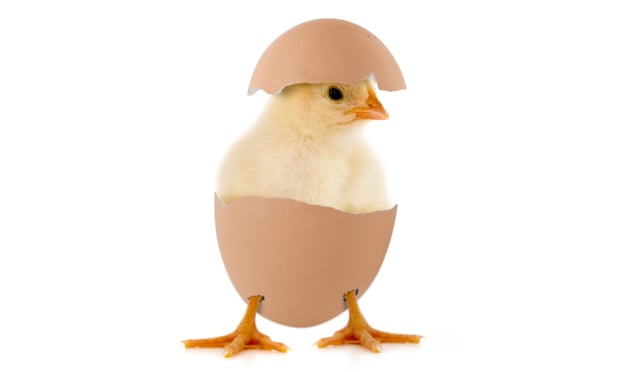
So what about the title of this blog post? I don't recall been asked this specific question, but it characterises the sort of innocent question a child might ask during a science lesson. Questions like this often do not reflect prescribed curriculum content. There might be a temptation therefore to brush them aside as irrelevant, perhaps also because we can't think of a readily available answer. I would contend that they deserve our attention. They can tell us about children's thinking, and sometimes they can even be so profound that they make us question our own understanding. But how might we respond?
How can a teacher deal with a question they don't know the answer to?
The first thing to recognise is that as a teacher you are not in the hotseat on a TV quiz show. You don't have to be able to reel off an answer like on University Challenge. In fact it's probably best not to think in terms of questions and answers, but rather questions and responses. Your response could be to actually put off giving an answer because you want more time to think about it. And you can tell children this - it's not a problem. Alternatively, you could buy yourself thinking time by telling the student, or class, that you'll return to this later and ask them for their views. Of course, you wouldn't be much of a teacher if you couldn't answer some questions about your subject, but the point is that good teaching is not about proving your subject prowess; it's about helping children improve their knowledge, understanding or skill. And that means drawing on your own skills as a teacher to maximise the learning potential of a question.
The question about why eggs don't taste like chicken presents us with a range of opportunities to help children think critically, and ultimately think more scientifically. I would approach this with this in mind. I have no detailed personal knowledge of why eggs don't taste like chicken - I should point out my degree was in chemistry not biology. However, I can reflect that there are several ways we could think about this question.
- Firstly, why don't we ask instead, why doesn't chicken taste like an egg? In other words, the question assumes some kind of primacy of one flavour over another, but why? There's no reason, other than that the egg came out of the chicken. But then again, the chicken originally came out of an egg...
- The next reflection is that the question implies that something should share properties of the thing from whence it came. We're effectively saying, "The egg comes from the chicken. It should, therefore taste like the chicken - why doesn't it?" This is flawed logic, and not borne out by everyday experience. We wouldn't expect the bark of an apple tree to taste of apple (would we?) Most food comes from complex organisms of which we only eat one part - generally the most edible and appetising part. There are plenty of other parts of the organism that are inedible and would taste very different. So there's another aspect to this issue about properties, and the question generally - it assumes organisms are homogeneous, when clearly they're not. When we think of the flavour of chicken we are thinking about one quite specific component of the chicken, the stuff commonly called 'meat'. We aren't thinking about other parts of the chicken like bones, feathers, beak, feet and so on. They are 'chicken' but I'm pretty sure they would not taste like what I call chicken.
So, as the previous paragraph hopefully conveys, a good response to the question "Why don't eggs taste like chicken?" is to unpick the question itself, and challenge the assumptions on which it is based. It could be closed by rewording it as a better question, perhaps, "Should we expect eggs to taste like chicken or not?"
The point of going through the sort of process described above is to extend children's thinking beyond the initial question. By getting them to reflect on the question itself, thinking about its in-built assumptions and how it might depart from logical thinking, we're equipping them to think critically. And that's a valuable skill.
Incidentally, it might be interesting to give this question to children and see what their responses are. It might show you that they can already thinking critically.

Comments
Post a Comment